
 Shop
 France
 Argentina
 Australia
 Chile
 Germany
 Italy
 Austria
 Portugal
 Spain
 Switzerland
 USA
 Hungary
 Countries & Regions
 Wine Storage
 Gifts
 Grapes & More
 Tastings
 B2B
 FAQ
 Contact
 About Us

 Bordeaux Pauillac
 0.75L


Château Latour – The Epitome of Longevity and Consistency
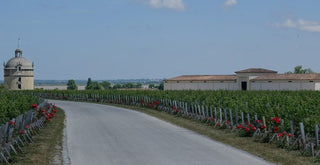
Château Latour stands among the most illustrious and refined wine estates in the world and is one of the three Premier Cru Classé properties situated in the commune of Pauillac. Located in the heart of Bordeaux on the Médoc peninsula, the estate lies just southeast of Pauillac in the hamlet of Saint-Lambert. Since 1993, the property has been owned by French industrialist and billionaire François Pinault.
The Secret of the L’Enclos Terroir – Organic Viticulture with Heart
In the 1990s, the historic heart of Château Latour—known as “L’Enclos”—began its transition to organic viticulture. Since the 2015 vintage, the entire harvest from the estate’s core vineyard has been certified organic, with 50 percent of L’Enclos farmed according to biodynamic principles.
In 2008, horse-drawn ploughing was reintroduced, and uprooted parcels are now granted a fallow regeneration period of at least five years before being replanted. By fostering natural biodiversity and pest control—such as installing insect habitats—the estate has completely eliminated the use of herbicides.
Initial biodynamic trials commenced in 2009 across a three-hectare plot. Today, the estate produces its own organic compost crafted from nettles, shredded vine shoots, and dogwood.
In total, the estate’s 92 hectares are tended with extraordinary precision and devotion by Estate Director Frédéric Engerer and his team. The vast majority of Château Latour’s vines thrive on deep gravel beds over clay subsoils ideally suited to viticulture. Only fruit from the 47-hectare walled heartland of L’Enclos is eligible for the Grand Vin. This prized enclosure is planted to 76 percent Cabernet Sauvignon, 22 percent Merlot, and 2 percent each of Petit Verdot and Cabernet Franc.
Château Latour – A Luminary Among Bordeaux Red Wines
The documented history of Latour dates back to 1378, when—according to chronicler Jean Froissart—a two-storey fortified tower known as La Tor de Sent-Maubert was captured by English soldiers. Viticulture on the site, however, began considerably earlier. As early as the 12th century, tax exemptions on the Anglo-French wine trade sparked a flourishing viticultural economy around Bordeaux, and archives from the 14th and 15th centuries confirm that substantial portions of L’Enclos were already under vine.
A historical record from 1755 demonstrates that a full century prior to the 1855 Classification, Latour was already revered as one of the region’s foremost estates—one of only four properties commanding more than 900 livres (approximately €16,000 today) per tonneau (around 225 litres). Until 1900, the red wines of Latour were produced exclusively from ungrafted vines; from 1920 onwards, phylloxera-resistant American rootstocks were grafted on-site.
As was customary among Bordeaux proprietors, the historic owners of Latour did not reside at the estate. Instead, vineyard management and winemaking were entrusted to highly skilled régisseurs whose meticulous correspondence with the owners provides an invaluable chronicle of the past 300 years at Château Latour. Among the estate’s early admirers was Thomas Jefferson—then United States Minister to France and later President—who noted the extraordinary quality of Latour’s wines in 1787.
The present château building was erected between 1862 and 1864. In 1962, the acquisition of a majority stake by the British Pearson Group ushered in a transformative era of modernisation and substantial investment in cellar technology and oak barrels.
The Wines
Vinification of the Grand Vin takes place in eighty temperature-controlled stainless-steel vats ranging in capacity from 12 to 164 hectolitres. Parcel-by-parcel fermentation is tailored precisely according to vine age, specific micro-terroir, and grape variety.
Produced since 1966, the second wine, Les Forts de Latour, is sourced from younger vines within L’Enclos as well as designated parcels immediately surrounding the enclosure. Far from a conventional second wine, it is crafted from specific terroirs cultivated expressly for its production.
Fruit that does not meet the strict selection criteria for Les Forts de Latour is directed into the estate’s third wine, Le Pauillac de Château Latour.
Across all three bottlings, the wines of Château Latour captivate connoisseurs and collectors worldwide with their aristocratic poise, depth, and unmistakable finesse.